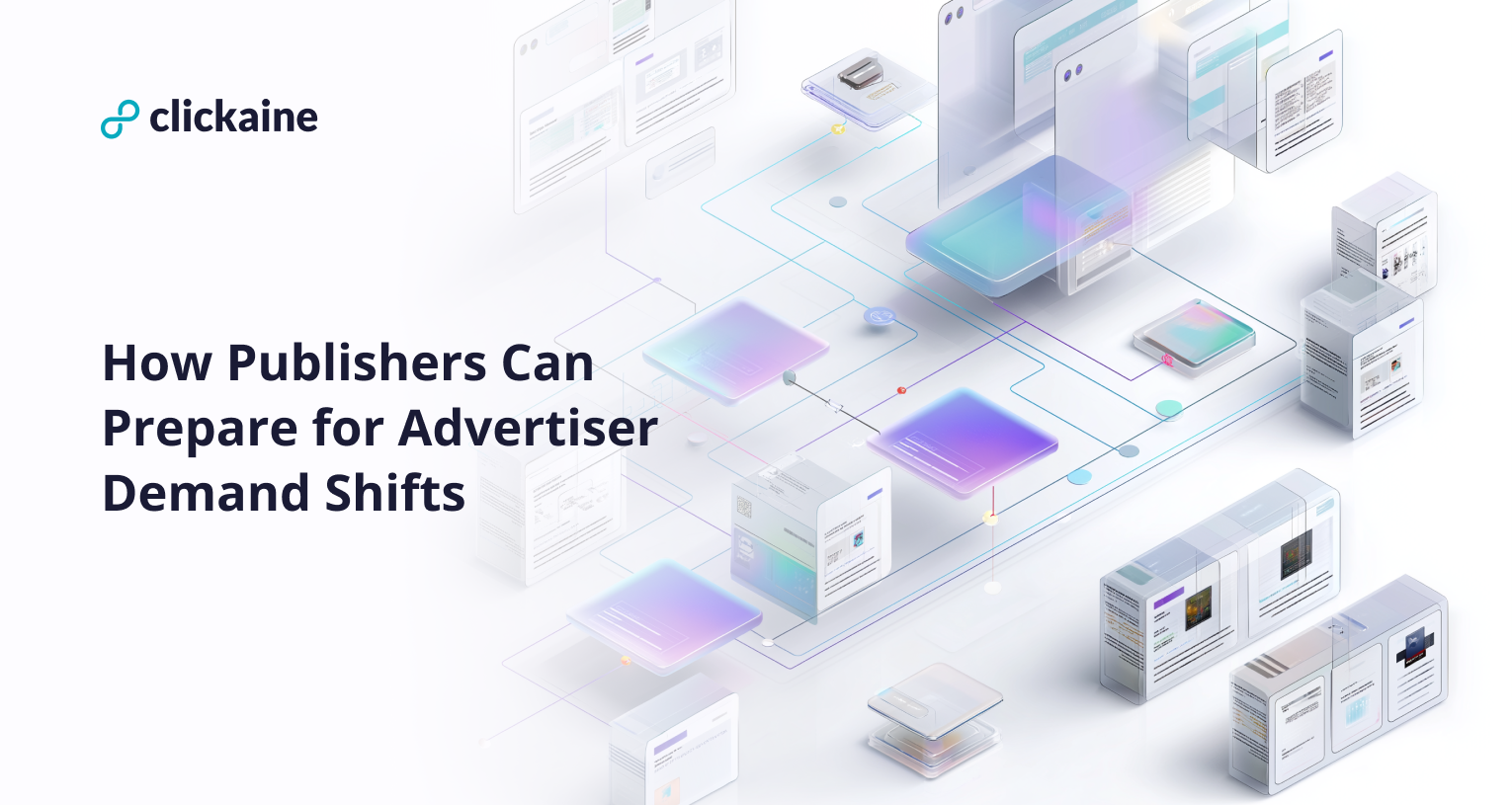
How Publishers Can Prepare for Advertiser Demand Shifts (Seasonality & Vertical Trends)
As a publisher if you’ve ever noticed your revenue going up and down while your traffic stays relatively stable — you’re not imagining things.
What’s changing is advertiser demand.
Every vertical — whether it’s iGaming, finance, utilities, or e-commerce — follows its own cycle. These cycles directly affect how much advertisers are willing to pay for your traffic.
Publishers who understand this don’t just “ride the wave” — they plan around it and earn more consistently.
Why seasonality matters more than you think
Most publishers focus on traffic volume. But in reality, traffic value is not fixed.
The same user from the same GEO can generate completely different revenue depending on:
- time of year
- advertiser competition
- user intent
For example, a user in December is far more valuable for e-commerce than the same user in February. Similarly, betting traffic spikes during major sports events, while finance demand often rises when people are actively managing money or reacting to market changes.
In simple terms:
your revenue depends not only on who your users are — but when they arrive.
Key vertical trends explained
Different verticals behave differently throughout the year. Understanding these patterns helps you adjust your monetization strategy instead of reacting too late.
Vertical seasonality comparison
| Vertical | Peak Periods | Low Periods | Key Driver |
| iGaming | Holidays, sports events | Off-season sports periods | Entertainment demand |
| Finance | Q1, pre-holidays | Stable economic periods | Financial urgency |
| Utilities | Stable, event-driven | Low media attention | Tech trends |
| E-commerce | Q4, holidays | Post-holiday months | Consumer buying behavior |
iGaming: fast spikes, fast drops
iGaming is one of the most volatile verticals. Demand can spike rapidly during events — and drop just as quickly.
During holidays or major sports tournaments, competition increases significantly. Advertisers raise bids to capture users, which means publishers benefit from higher CPC and better fill rates.
However, outside of these peaks, demand can soften.
Publishers who prepare for iGaming peaks in advance (by scaling traffic or testing formats early) tend to capture the highest returns.
Finance: high value, high requirements
Finance traffic is often among the most valuable — but also the most sensitive to user intent.
Unlike iGaming, it doesn’t rely as much on events, but rather on behavioral cycles. People look for loans, trading platforms, or financial tools at specific moments — often tied to planning, uncertainty, or spending periods.
Because of this, advertisers in finance are more selective. They prioritize:
- quality traffic
- clear intent
- clean user flows
This means publishers need to focus not just on volume, but on traffic quality and audience targeting.
Utilities: stability with sudden growth
Utilities (VPNs, apps, downloads) behave differently. They tend to be more stable but can suddenly spike when triggered by external factors — such as privacy concerns or global events.
This makes them a good “baseline” vertical in a monetization strategy.
Many experienced publishers use utilities to maintain стабильный доход while testing higher-risk verticals like iGaming.
E-commerce: the most predictable cycle
E-commerce is one of the easiest verticals to plan around.
Demand increases steadily toward major shopping periods and peaks during:
- Black Friday
- Cyber Monday
- holiday shopping season
After that, there’s usually a noticeable drop.
The key here is preparation. Advertisers increase budgets early — so publishers who are ready before peak periods capture more revenue.
How strategy should change throughout the year
Instead of treating monetization as a fixed setup, publishers should adjust their approach depending on demand cycles.
Static vs Adaptive strategy
| Approach | Result |
| Same setup year-round | Missed revenue opportunities |
| Adapting to vertical trends | Higher long-term ROI |
| Reacting after peaks | Lower earnings |
| Preparing before demand spikes | Maximum monetization |
What smart publishers do differently
The difference between average and top publishers is not traffic — it’s timing and flexibility.
They don’t wait for performance to drop. Instead, they:
- monitor trends across verticals
- test new formats before peak periods
- adjust monetization based on demand
For example, when competition increases, formats that provide continuous visibility and higher engagement tend to perform better, because advertisers are willing to pay more for attention.
Practical example
Imagine entering Q4 with the same setup you used in summer.
You might still earn — but you’ll likely miss the biggest opportunity of the year.
Now compare that to a publisher who:
- prepares creatives early
- tests formats in advance
- adjusts targeting
The difference in revenue can be significant — even with the same traffic.
The real opportunity
Seasonality is often seen as a problem — something unpredictable.
But in reality, it’s one of the biggest advantages you can have.
Because while many publishers react to changes,
the ones who understand demand cycles can anticipate them.
Final takeaway
Your monetization strategy should never be static.
Advertiser demand is constantly shifting — across verticals, GEOs, and time periods. The more flexible your approach is, the more you can benefit from these shifts.
- The goal isn’t just to generate traffic.
- The goal is to align your traffic with demand at the right time.
That’s where real growth happens.
Grow your monetization with Clickaine! Sign up now!