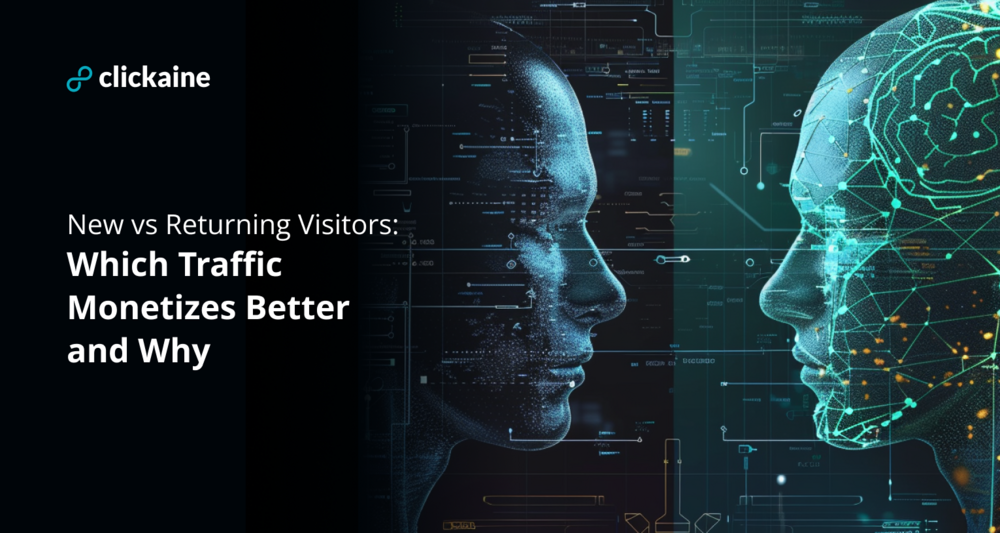
New vs Returning Visitors: Which Traffic Monetizes Better and Why
For many publishers, traffic is still measured in simple terms: more users means more revenue. But in practice, not all visitors are equal. Two users can land on the same page, see the same ads — and generate completely different results.
The difference often comes down to one simple factor:
Is this their first visit, or have they been here before?
Understanding how new and returning visitors behave is one of the easiest ways to unlock higher revenue without increasing traffic volume.
Why this distinction matters
When a user visits your site for the first time, everything is unfamiliar. The layout, the content, the navigation — and yes, the ads.
A returning user, on the other hand, already knows what to expect. They are not exploring anymore — they are coming back with intent.
This difference directly affects how users interact with monetization.
New visitors are more reactive. Returning visitors are more selective. And that changes everything.
How new visitors generate revenue
New users are typically driven by curiosity. They arrive from search, social media, or external links, often without strong attachment to your site.
Because of that, their behavior tends to be faster and more impulsive. They scan the page, make quick decisions, and either leave or engage.
From a monetization perspective, this works surprisingly well.
Ads feel like part of the discovery process. Users haven’t developed any habit to ignore them yet. This often results in higher initial interaction rates.
That’s why formats with strong visibility — like popunder or attention-grabbing placements — tend to perform well with new traffic.
However, this value is short-term. If the user leaves and never comes back, that’s the only chance you have to monetize them.
How returning visitors behave differently
Returning users bring a completely different dynamic. They already trust your content enough to come back. They spend more time on the site, browse more pages, and often engage deeper.
But they are also more resistant to aggressive monetization.
They’ve seen your layout before. They know where ads appear. They subconsciously filter out what they consider irrelevant.
This doesn’t mean they monetize worse — it means they monetize differently.
Instead of reacting to visibility, they respond to relevance. Instead of clicking impulsively, they engage when the offer fits their intent.
This is why softer formats, better placement timing, and a cleaner user experience tend to work better with returning traffic.
Side-by-side comparison
To better understand the difference, it helps to look at both traffic types in a structured way:
| Factor | New Visitors | Returning Visitors |
| Behavior | Exploratory, impulsive | Intent-driven, selective |
| Session length | Short | Longer |
| Trust level | Low | Higher |
| Ad interaction | Immediate, reactive | Filtered, intentional |
| CTR | Higher initially | Lower but more stable |
| Revenue type | Short-term | Long-term |
| Best formats | Popunder, high-visibility ads | Native, integrated formats |
| Risk | High bounce rate | Ad fatigue if overused |
Which one actually monetizes better?
If you look at a single session, new visitors often generate more immediate revenue. They click more, react faster, and are easier to monetize in the moment. But if you look over time, returning visitors often bring more total value. They come back, engage repeatedly, and generate revenue across multiple sessions.
So the real answer is not about choosing one over the other.
- New visitors maximize short-term earnings
- Returning visitors build long-term revenue stability
The real opportunity for publishers
The biggest missed opportunity is treating all users the same.
When every visitor sees the same monetization setup, you lose efficiency. Some users are over-monetized, others are under-monetized.
Instead, the goal should be balance.
- New users can be monetized more aggressively during their first session, capturing value while attention is high.
- Returning users should experience a more refined approach — one that keeps them engaged without pushing them away.
This balance improves not only revenue, but also retention — which ultimately leads to more impressions and higher lifetime value.
Why this matters at scale
At small volumes, the difference between these segments may seem minor. But at scale, it becomes one of the most important revenue drivers.
- Optimizing only for new traffic may increase short-term profit but hurt retention.
- Optimizing only for returning users may protect UX but leave money on the table.
The most successful publishers understand both — and build their strategy around how users actually behave, not just how many of them there are.
Traffic is not just about numbers. It’s about patterns.
New and returning visitors represent two different types of value — immediate and long-term. When you start recognizing this difference and adjusting your monetization accordingly, you don’t just increase revenue.
You make it more predictable, more stable, and easier to scale. And that’s where real growth begins.